The number of calories you should eat depends on:
The key concept behind this is your Total Daily Energy Expenditure (TDEE).
This guide explains how to calculate it, what safe minimums are, and how to adjust based on your goal.
Most adults need:
These ranges vary depending on activity level.
To lose weight:
Eat 300–500 calories below your TDEE.
To gain weight:
Eat 250–500 calories above your TDEE.
To maintain weight:
Eat at your TDEE.
TDEE stands for Total Daily Energy Expenditure.
It represents the total number of calories your body burns in a day.
TDEE includes:
Your TDEE changes based on activity level.
A common method is the Mifflin-St Jeor formula:
For men:
BMR = (10 × weight in kg) + (6.25 × height in cm) − (5 × age) + 5
For women:
BMR = (10 × weight in kg) + (6.25 × height in cm) − (5 × age) − 161
This gives you your estimated TDEE.
Remember:
This is an estimate — not an exact number.
Tracking and adjusting based on real-world data is more accurate.
To lose weight safely:
Reduce intake by 300–500 calories per day below TDEE.
This typically results in:
0.5–1 pound of weight loss per week.
Avoid extreme deficits.
Large deficits can cause:
For most adults:
Going below these levels without medical supervision can increase risk of:
If you're consistently under-eating, progress may stall.
To gain weight:
Add 250–500 calories above your TDEE.
This helps:
Aggressive overeating often leads to unnecessary fat gain.
Controlled surplus works best.
If you're intentionally gaining:
Many people underestimate calorie intake.
Tracking provides:
You don’t need perfection — but you need consistency.
If you're new and overwhelmed:
→ How to Track Calories Without Weighing Food
If you want a faster system:
After 2–3 weeks:
If weight is not changing:
Adjust by 100–200 calories.
If losing too fast:
Increase calories slightly.
If gaining too quickly:
Reduce surplus slightly.
Your body is the feedback system.
If you've struggled before:
Most people lose weight by eating 300–500 calories below their TDEE.
A 250–500 calorie surplus above TDEE is generally recommended.
For most adult women, 1,200 calories is considered a lower safe minimum. Many men require more.
They provide estimates. Tracking your intake and adjusting based on real progress is more reliable.
Yes. Protein intake is especially important for muscle retention and growth.
Calculating calories is step one.
Tracking consistently is step two.
You don’t need perfection.
You need:
If you want a faster way to track daily intake:
→ Explore the full system:
AI Calorie Tracker

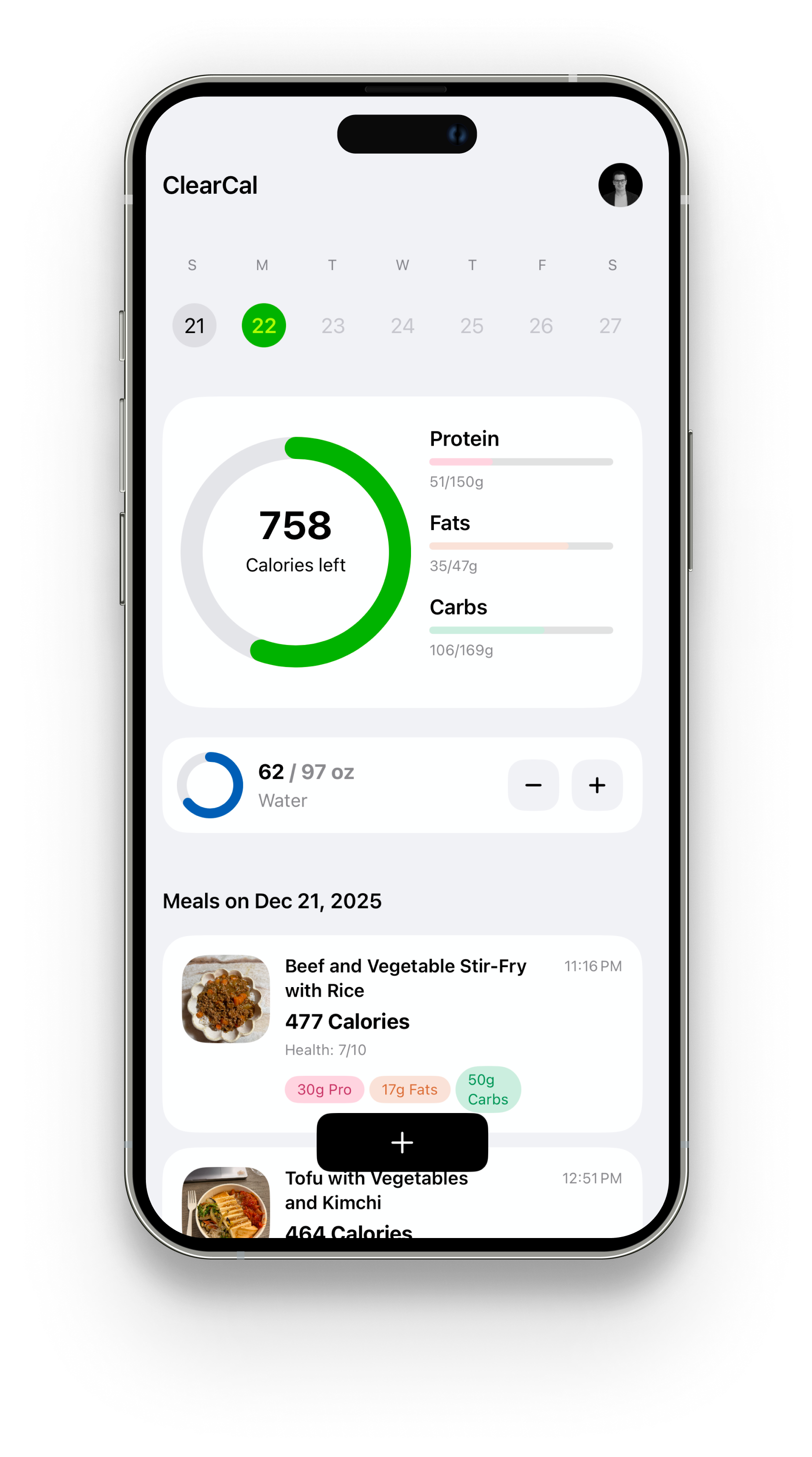

Snap a photo or describe your meal, and ClearCal analyzes each meal so you can acheive your goals without the headaches.