You don’t need a food scale to start tracking calories.
While weighing food can improve precision, most people can track calories effectively using simple estimation methods especially when consistency matters more than perfection.
This guide explains practical ways to estimate calories without weighing food.
Yes.
You can track calories without weighing food by:
For most weight loss or weight gain goals, this approach is accurate enough to produce results.
Food scales can be helpful, but they aren’t realistic for everyone.
Common challenges:
Weighing food every meal can become time-consuming and mentally exhausting.
That’s why many beginners look for:
“How to track calories without weighing food.”
Your hand can act as a built-in portion reference.
Here’s a simple guide:
This method isn’t perfect, but it’s consistent.
And consistency drives progress.
One of the simplest ways to track calories without weighing food is to use AI-based food scanning.
Instead of:
You take a photo.
AI estimates calories and macros based on:
If you want to explore this approach:
Or specifically:
AI tracking dramatically reduces friction — especially for beginners.
When tracking without weighing:
Expect a margin of error of roughly 5–15%.
This applies to:
But here’s the important part:
Weight change happens over weeks — not single meals.
If you consistently estimate within a reasonable range, trends remain reliable.
For a full breakdown of AI accuracy:
Weighing food may be helpful if:
For most beginners, it’s optional.
Restaurant meals are difficult to weigh.
Instead:
AI-based scanning is especially helpful for restaurant meals.
If you want to scan directly:
Yes.
For weight loss:
A small estimation error often balances out across days.
For weight gain:
Maintaining a consistent surplus matters more than precision.
If you're gaining weight intentionally:
Many beginners quit tracking because they believe:
“If I can’t measure perfectly, it’s pointless.”
That’s not true.
Tracking is about:
An easy system you stick with beats a perfect system you abandon.
If you’re looking for a calorie tracker without complicated logging:
Yes. Many people lose weight using portion guides, visual estimation, and consistent tracking.
No. It can help, but it’s not required for most people.
Yes. With clear photos, AI typically estimates within 5–15% of manual logging.
If progress stalls, slightly increase estimated portions. Adjust gradually rather than aiming for perfection.
It can improve precision, but it’s not necessary for sustainable tracking.
If weighing food feels overwhelming, start simple.
Use portion guides.
Estimate visually.
Track consistently.
And if you want an easier way to estimate without logging or weighing:
→ Explore AI-based tracking here:
AI Calorie Tracker

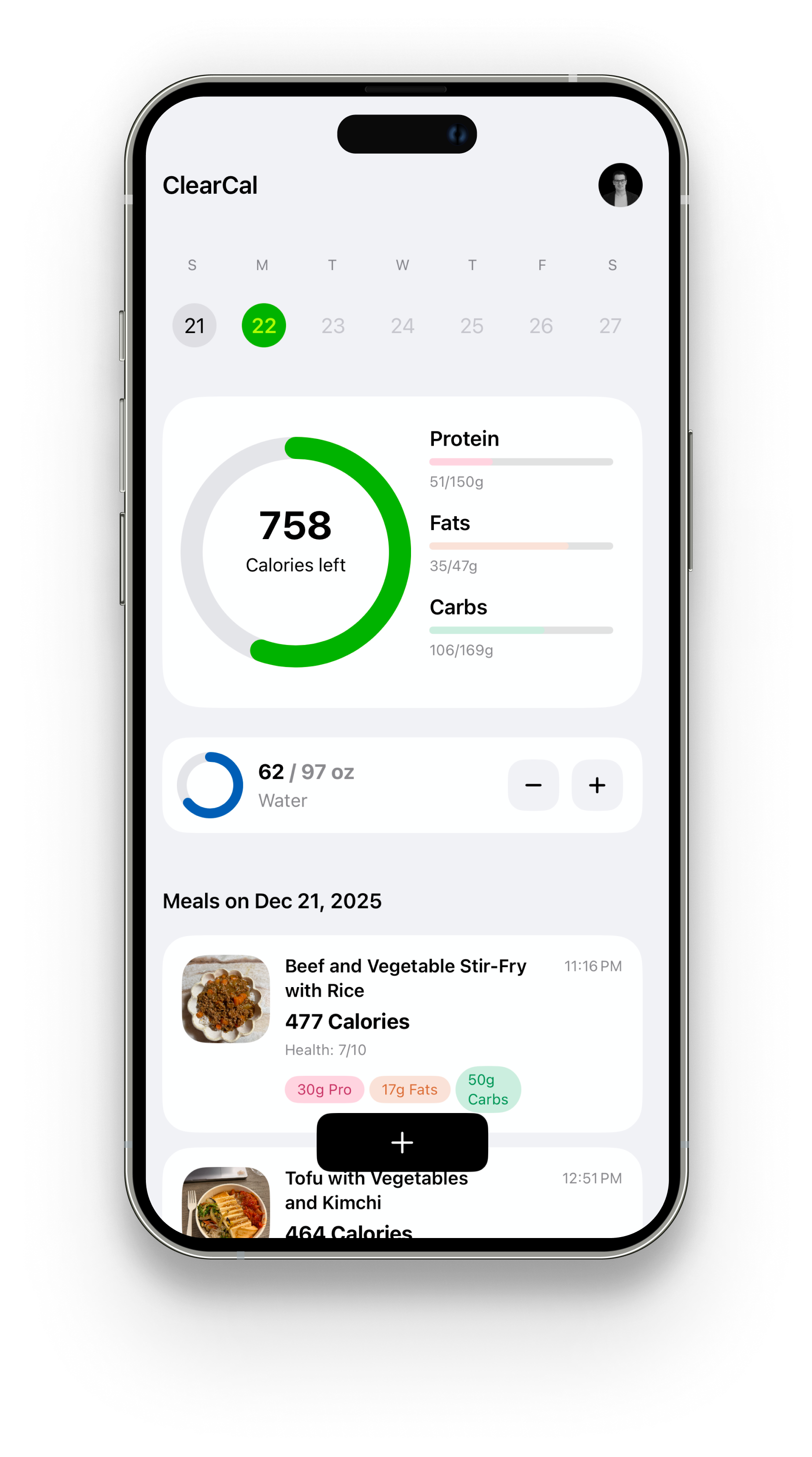

Snap a photo or describe your meal, and ClearCal analyzes each meal so you can acheive your goals without the headaches.