Oranges are a refreshing and nutrient-rich fruit known for their natural sweetness and high vitamin C content. They are commonly eaten as a snack, added to meals, or consumed as juice. Understanding the calories in oranges by size and serving can help you better manage your calorie intake and make healthier food choices.

| Serving Size | Calories |
|---|---|
| 1 small orange | 45 |
| 1 medium orange | 62 |
| 1 large orange | 86 |
| 1 cup orange slices | 85 |



Oranges are a low-calorie fruit that provides a combination of carbohydrates, fiber, and essential vitamins. A 100 gram serving contains about 12 grams of carbohydrates, primarily from natural sugars and fiber, making oranges a great source of quick and natural energy.
One of the biggest nutritional benefits of oranges is their high vitamin C content. Vitamin C supports immune function, helps with collagen production, and acts as a powerful antioxidant that protects the body from oxidative stress.
Oranges also contain fiber, potassium, and various plant compounds, which contribute to overall health. The fiber in oranges helps slow digestion, improve satiety, and regulate blood sugar levels.
Because oranges are high in water content, they are naturally filling despite being low in calories. This makes them a great option for snacks and meals focused on calorie control.
While whole oranges are easy to track, calorie intake can increase when consumed as juice or combined with other ingredients. Many people now use tools that can scan food calories to estimate intake more accurately without manually logging each ingredient.
If you want a faster and more efficient approach, tools like an AI calorie tracker or a photo calorie counter can simplify tracking and improve consistency.
Oranges are an excellent food for weight loss due to their low calorie density and high water and fiber content. A medium orange contains about 60 calories, making it a satisfying snack that won’t significantly impact your daily calorie intake.
The fiber in oranges helps increase fullness and reduce hunger, which can make it easier to maintain a calorie deficit. Because they are naturally sweet, oranges can also help reduce cravings for high-calorie desserts and processed foods.
Oranges are especially useful as a snack between meals or as part of a balanced breakfast. Pairing oranges with protein sources like yogurt or nuts can help improve satiety and create more balanced meals.
Consistency is key when it comes to weight loss. Many people struggle with traditional calorie tracking, which is why tools that allow you to scan food calories or use a calorie tracker with camera are becoming more popular.
If you want a more flexible approach, you can also explore how to track calories without weighing food or understand why calorie counting fails.

Whole oranges are generally healthier because they contain fiber, while juice is higher in sugar and less filling.
Yes. Oranges are low in calories and high in fiber and water, making them a great food for weight loss.
Oranges contain about 12 grams of carbohydrates per 100 grams, primarily from natural sugars and fiber.
A medium orange contains about 60–62 calories, depending on size.

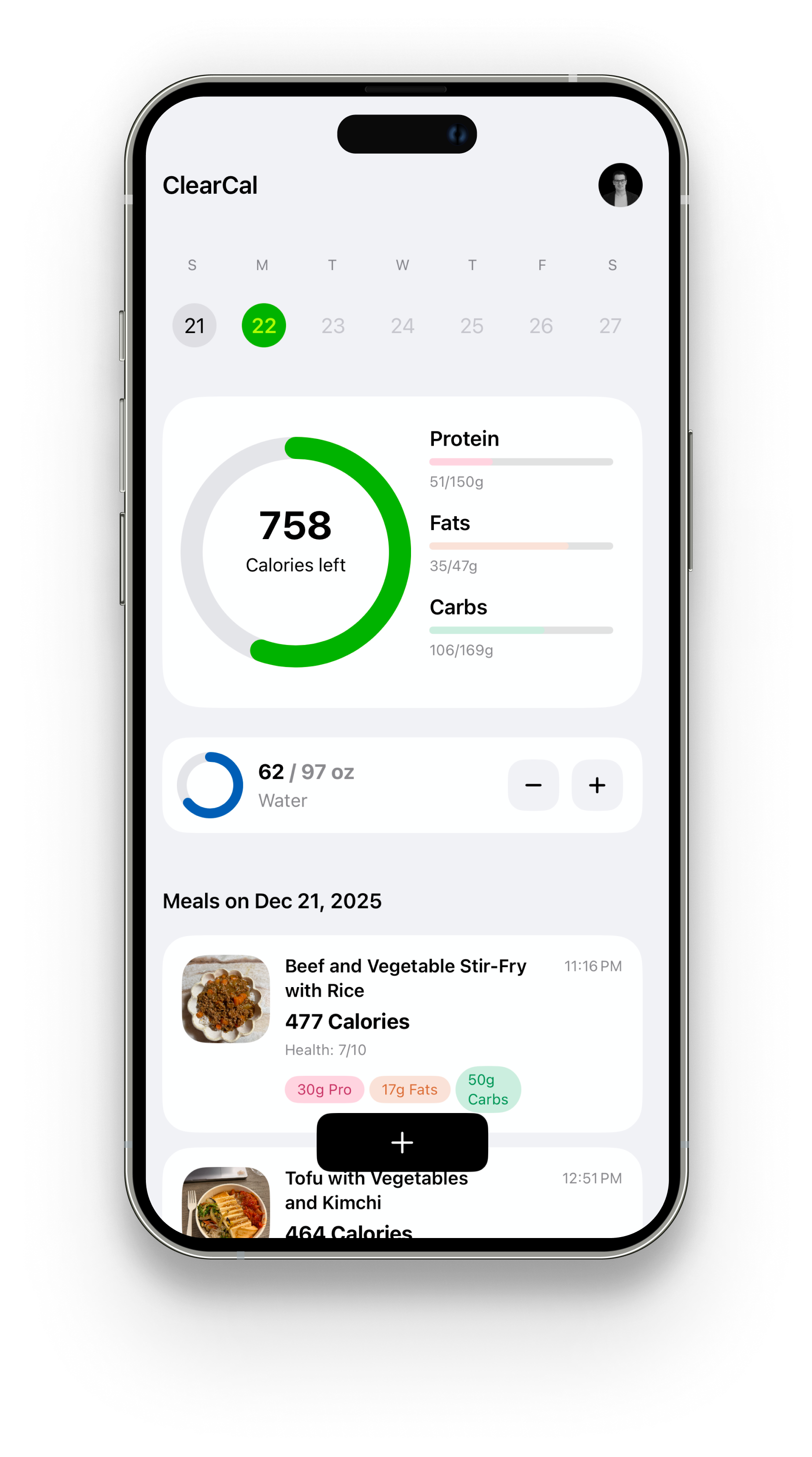
Snap a photo or describe your meal, and ClearCal analyzes each meal so you can acheive your goals without the headaches.